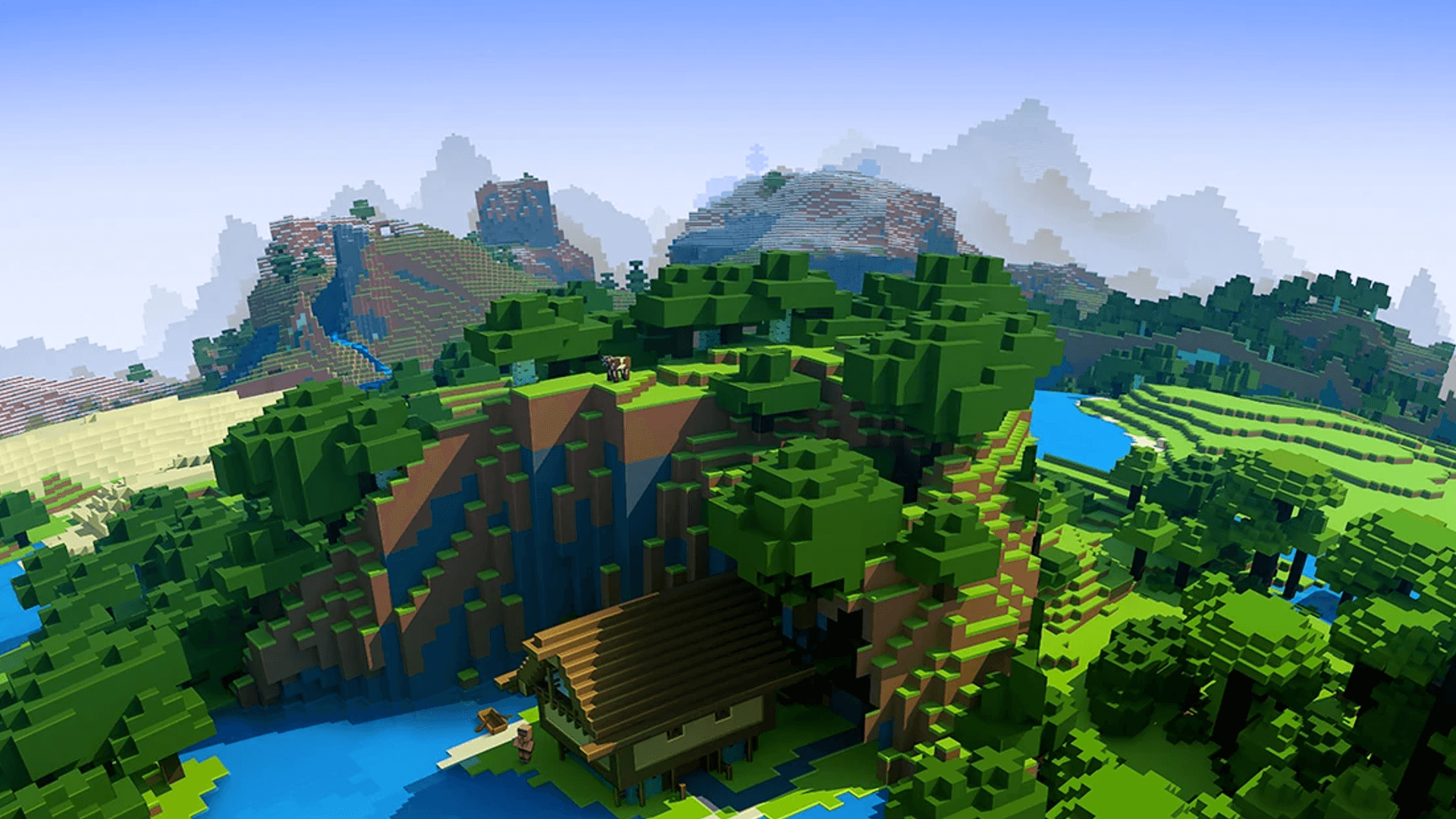
Biome map from your seed
The map calculates your world's biomes directly from the seed for the Overworld, Nether, and End. Drag to pan and use the plus and minus buttons or mouse wheel to zoom, from 1:256 to 1:1 in the Overworld.
You decide which services we may enable for analytics, personalization, and external content.
We use cookies and similar technologies on our website to personalize content, embed external media, and better understand how individual areas are used.
Necessary cookies
These entries support essential functions such as security, stability, and form processing.
Optional sections
Your data may be processed with your consent or on the basis of legitimate interests. In the cookie settings, you can reject or explicitly allow each optional category.
Some services process personal data in third countries. By consenting, you also agree to this transfer. You can find more information in our Privacy Policy.
You can reopen and change your selection at any time. · 1.0.2
 Minecraft Java & Bedrock Edition
The Minecraft Seed Map lets you view your world's biome map without loading it. Enter a seed, choose an edition, version and dimension, find biomes and click to copy coordinates. Supports Java Edition 1.12, 1.16 and 1.18 through 1.21, and Bedrock Edition 1.18 through 1.21. Free, with no sign-up or download: the map is calculated in your browser, and your seed never leaves your device.
Built by Rugile Rutkauskaite
Like the seed? Explore it live on your own server.
Drag to move; click to get a point's coordinates.
Visible biomes
No map loaded yet.
Pure geometry and algorithms, no Minecraft assets: world generation runs entirely in your browser (WebAssembly), and your seed never leaves your device. Based on the open-source library cubiomes (MIT license).
How it works
Five steps from seed to biome, with no download or sign-up.
Step 1
In Java Edition, enter /seed in chat. In Bedrock Edition, find the seed in the world settings.
Step 2
Enter the seed as a number or text in the “Seed” field, then choose an edition (Java or Bedrock), version and dimension (Overworld, Nether or End). The Nether is only available for Java.
Step 3
Drag to move the map, and zoom with the plus and minus buttons or your mouse wheel. Use X, Z and “Jump” to center the map on specific coordinates.
Step 4
Click a point on the map to see its biome and X/Z coordinates. Use “Copy coordinates” to copy them in X ~ Z format, for example for the /tp command.
Step 5
Select a biome under “Find nearest occurrence” and click “Search from current center”. The map jumps to the nearest occurrence within 6,000 blocks.
Features
Enter your seed, choose an edition, version, and dimension, and instantly see where each biome is in your world.
The map calculates your world's biomes directly from the seed for the Overworld, Nether, and End. Drag to pan and use the plus and minus buttons or mouse wheel to zoom, from 1:256 to 1:1 in the Overworld.
Click the map to see the biome and X/Z coordinates of a point. “Copy coordinates” copies them to your clipboard in X ~ Z format, ready for the /tp command.
Select a biome under “Find nearest occurrence.” The search starts at the current center of the map and jumps to the closest occurrence within 6,000 blocks.
Java Edition 1.12, 1.16, and 1.18 through 1.21 with Overworld, Nether, and End. Bedrock Edition 1.18 through 1.21 with Overworld and End.
Enter your seed as a number or text. The tool converts text to a number the same way Minecraft Java does when creating a world.
No sign-up or download: world generation runs as a WebAssembly module in your browser, and your seed never leaves your device.
Find biomes
To find a specific biome in-game, you can use either a command or a map generated from the seed. The Seed Map doesn't require cheats.
/locate biome only works with cheats enabled or operator permissions and gives you the coordinates of the nearest occurrence. It doesn't show you an overview of the biomes around you.
The Seed Map only needs your seed. See all the biomes around a point on the map, use “Find nearest occurrence” to locate a specific biome, and copy its coordinates. Then travel there normally in-game, even in a Survival world without cheats.
These biomes are often far from spawn. Select them under “Find nearest occurrence”; the list uses English biome names. The search won't find biomes that don't exist in your selected version.
Java & Bedrock
World generation has changed between versions. Choose the edition and version your world was generated with.
| Edition | Versions | Dimensions |
|---|---|---|
| Java Edition | 1.12, 1.16, 1.18, 1.19, 1.20, 1.21 | Overworld, Nether, and End |
| Bedrock Edition | 1.18, 1.19, 1.20, 1.21 | Overworld and End (the End as a single biome) |
Since the seed parity update in 1.18, Java and Bedrock generate the same biomes in the Overworld and End. The map therefore calculates Bedrock biomes the same way as Java biomes and uses Java's map colors, which may differ slightly from Bedrock's. The Nether is still generated differently in Bedrock, so it's only available here for Java. Older Bedrock versions predate seed parity.
First check the seed, edition, version, and dimension. Areas generated in an older version retain their old terrain. The map can't show worlds with Mods or data packs that change world generation.
Tips
Discover more
Describe your server.properties in your own words using the ZapX AI Agent or set each option manually — with a live preview to copy or download.
Built by Florian Galz
Perfect circles, ovals, and spheres as block grids—with block count and /fill command export.
Built by Rugile Rutkauskaite
Slime chunks for Java (by seed) and Bedrock on a pannable map, with nearby chunks and a farm spot finder.
Built by Justin Schuessler
Find the stronghold and End portal using two Eyes of Ender or a seed, with a /tp command.
Built by Marvin Kluck
Choose an item, name, lore, and enchantments—a ready-to-use /give command with the correct syntax for each Java version.
Built by Rugile Rutkauskaite
Calculate Nether portal coordinates for two bases (1:8 rule) — including a travel time comparison for your Nether highway.
Built by Luca Stanek
FAQ
Quick answers about seeds, biomes, Java, Bedrock and supported versions.
A Minecraft Seed Map (also called a biome finder or seed viewer) is a biome map calculated directly from your world's seed. Enter your seed above, choose an edition, version and dimension, and the map shows where each biome is without you having to load or explore the world. Unlike the in-game map, which fills in as you explore, this one also shows areas you've never visited. It uses cubiomes, an open-source reimplementation of Minecraft world generation.
In Java Edition, enter /seed in chat; on servers, you need operator permissions to do so. In Bedrock Edition, the seed is in the world settings. On your own server, you can find it in server.properties under level-seed if it was entered there when the world was created. Enter the seed in the “Seed” field above. Text seeds work too: the tool uses numbers in the 64-bit range directly and converts any other text to a number the same way Minecraft Java does.
Yes. The /locate biome command only works in-game with cheats enabled or operator permissions. The Seed Map only needs your seed: select a biome under “Find nearest occurrence” and click “Search from current center”. The map jumps to the nearest occurrence and shows its coordinates. You can then travel there normally in-game, even in a Survival world without cheats.
Move the map to your starting point, or enter X and Z and click “Jump”. Then select a biome from the list under “Find nearest occurrence”. The list uses English biome names, such as Cherry Grove or Mushroom Fields. The search starts at the current map center and extends up to 6,000 blocks. If it finds nothing, move the map and search again. It can't find biomes that don't exist in your selected version, such as Cherry Grove before 1.20.
Yes, for Bedrock 1.18 through 1.21. Since the seed parity update in 1.18, Java and Bedrock generate the same biomes in the Overworld and End. The map therefore calculates Bedrock biomes the same way as Java biomes and uses Java's map colors, which may differ slightly from Bedrock's. It displays the End as Bedrock classifies it: a single biome. The tool doesn't offer the Nether for Bedrock because it is still generated differently. Older Bedrock versions predate seed parity and aren't supported.
Java Edition 1.12, 1.16, 1.18, 1.19, 1.20 and 1.21, and Bedrock Edition 1.18 through 1.21. World generation has changed between these versions, so select the version your world was created with. If the map doesn't match your world, check the seed, edition, version and dimension. Areas generated in an older version retain their old terrain, and the map doesn't account for Mods or datapacks that change world generation.
No, the Seed Map only shows biomes, not structures. Use the Stronghold Finder for strongholds and the End Portal, or the Slime Chunk Finder for slime chunks. You'll find both among the other Minecraft tools on this page.
Yes. The Seed Map is free and requires no sign-up. All calculations run directly in your browser as a WebAssembly module. Your seed is neither sent to a server nor stored.
Any more questions?
Contact SupportRun the same seed on your own server — with DDoS protection and one-click Modpack installation.
No setup. No risk. Online in seconds.
Looking for more tools? View all Minecraft tools
© 2026 ZAP-Hosting GmbH
 Preferred source on Google










